

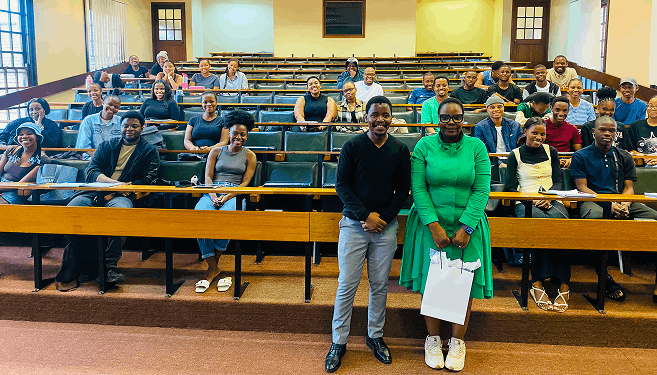
A highly rated scholar in the sub-discipline of Town and Regional Planning at the University of KwaZulu-Natal (UKZN), Professor Hangwelani Magidimisha-Chipungu, delivered an impactful lecture to Environmental Law students in the School of Law.
As a rated National Research Foundation (NRF) scholar at UKZN holding the Chair in Inclusive Cities, her expertise supports the importance of an interdisciplinary approach to climate change issues and urban planning.
The lecture, titled: ‘Are South African Cities Ready? Urban Planning in the Face of Climate Change’, offered insightful perspectives on the intersection between climate change and urban planning.
Commenting on behalf of the students, the Environmental Law class representative Mr Vuyo Ndlovu said: “We learned a lot about climate change and realised that Law graduates can also specialise in urban planning owing to their knowledge and critical analysis skills. The lecture further made us appreciate the link between poor urban planning and environmental disasters such as floods that often affect KwaZulu-Natal.”
Magidimisha-Chipungu emphasised the importance of integrating spatial planning, environmental law and socio-economic justice to respond effectively to climate change pressures such as flooding, heat stress and infrastructure vulnerability.
The lecture called for a new generation of legal professionals able to interact with land use management, regulatory and compliance aspects, and climate accountability in rapidly urbanising contexts. A key focus was placed on the need for transformative urban governance, where law is not merely reactive but actively drives sustainable development, protects vulnerable communities, and enables cities to transition towards low-carbon and climate-resilient features.
The session formed part of ongoing efforts to bridge disciplinary divides between law and built environment studies, ensuring that graduates are better prepared to navigate the complex realities of climate change in South Africa and beyond.
Magidimisha-Chipungu said she was grateful for the invitation to attend which was extended by colleagues within the School of Law, stressing the importance of interdisciplinary engagement between law and built environment studies.
She said she looked forward to strengthening collaboration across a range of shared research and teaching interests in the future.
Environmental Law lecturer, Mr Siphesihle Mbatha, noted that the lecture resonated deeply with him and his colleagues. He said he believed it marked the beginning of a fruitful collaboration between the School of Law and the Discipline of Architecture, Planning, and Housing.
Words: NdabaOnline
Photograph: Supplied