College Research Colloquium
Theme:Transforming Law, Governance and Business: Research for Inclusive Growth in the Economy and Sustainable Development
Closing date for submission of abstracts: 22 August 2025
Abstract acceptance notification: 05 September 2025
If you would like to be considered for a prize, you need to submit a full paper as follows:
Colloquium dates: 9 & 10 October 2025
Please note: Late paper submission of full papers will not be accepted.
The Organizing Committee of the College of Law and Management Studies takes immense pride in extending an invitation to you for this year’s College Research Colloquium. This event is centred around the theme “Transforming Law, Governance, and Business: Research for Inclusive Growth and Sustainable Development”. Our goal is to bring together diverse members of academia, scholars, researchers, senior practitioners, graduates, and post-graduate students – from various Schools within the College of Law and Management Studies – and celebrate the research that our College is producing. This event presents a unique opportunity for you to connect with your fellow colleagues. By engaging with these individuals, you’ll gain insights from their distinctive perspectives and experiences. You may also discover some potential collaborations.

Deputy Head of Economic Development and Investment Promotion: eThekwini Municipality
Dr Ajiv Maharaj is an Honorary Research Fellow at the University of KwaZulu-Natal’s Graduate School of Business and Leadership. He is the Deputy Head of Economic Development and Investment Promotion at eThekwini Municipality and chairs the Economic Affairs Trade and Investment Forum at the Durban Chamber of Commerce and Industry. In his current role within the eThekwini Metro, he is responsible for economic research, policy, strategy and innovation.

PhD candidate in Teacher Education and Professional Development: School of Education, University of KwaZulu-Natal
Mr Luthando Molefe (29) is a PhD candidate in Teacher Education and Professional Development (TEPD) at the University of KwaZulu-Natal (UKZN), School of Education in South Africa. He recently served as a Visiting Student Researcher at the split-site Universities of Northern Iowa and Oregon in the United States of America. Recently, he also served as Coordinator: Academic Monitoring and Support/Wellness at UKZN’s School of Education, making him the youngest member of the Teaching and Learning Committee in the same School. He holds the Master of Education (Cum Laude) in TEPD, Bachelor of Education Honours (Summa Cum Laude) in TEPD and Bachelor of Education in Science Education, all at UKZN. His research interests include self-reflexive scholarship, professional learning, teacher professional development, arts-based research, natural sciences teachers and teaching, rural education and community-engaged scholarship. Molefe has presented his research, including serving as keynote/plenary speaker and guest lectures at over 60 international and national Conferences in over 15 countries. Moreover, he has successfully supervised over 20 postgraduate students at the Honours level. Furthermore, he has successfully secured over 3,6 million academic/research grants. Finally, he holds over 20 Awards and over 140 Certificates of Excellence in Academia, Community Engagement/University Service and Leadership roles, which are the pillars he is mostly passionate about.

Director: Institute for the Future of Knowledge, University of Johannesburg
Professor Arthur Mutambara is an academic and technology expert currently serving as the director and full professor of the Institute for the Future of Knowledge (IFK) at the University of Johannesburg (UJ) in South Africa. At IFK, Mutambara leads the Decentralized Artificial Intelligence and Control Systems (DAICS) Research Group, driving ground-breaking research initiatives. He also spearheads the African Agency in Public Health (AAPH) initiative within the Future of Health (FoH) Research Group. In addition to his academic responsibilities, Professor Mutambara is deeply involved in teaching Control Systems at both UJ’s Mechanical Engineering and Electrical and Electronic Engineering Departments, imparting knowledge and fostering innovation among students
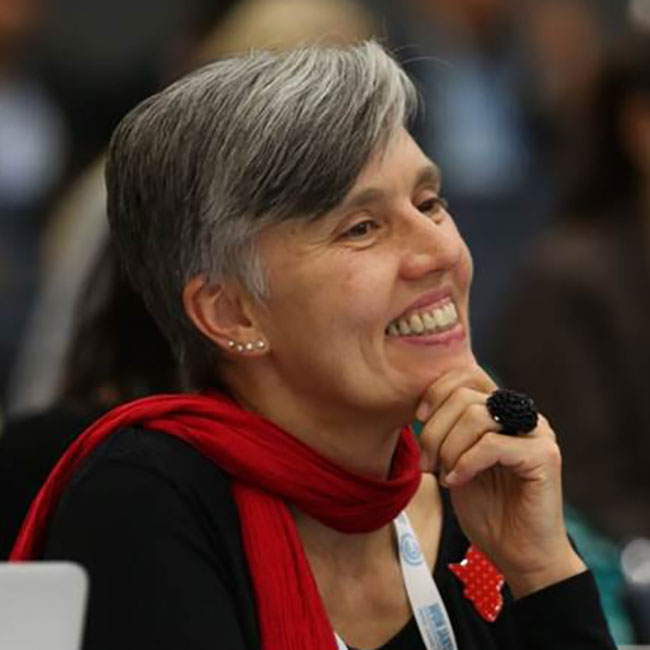
Honorary Professor: School of Life Sciences, University of KwaZulu-Natal
Professor Debra Roberts is a scientist who has spent four decades working at the science-policy-practice interface at local and international levels. Professor Roberts headed the Sustainable and Resilient City Initiatives Unit and Environmental Planning and Climate Protection Department in eThekwini Municipality (Durban, South Africa) between 1994 and 2024. She was elected as the Intergovernmental Panel on Climate Change (IPCC) Co-Chair of Working Group II for the sixth assessment cycle (2015-2023). Professor Roberts has held several international advisory roles, for example advising: United Cities and Local Governments; ICLEI-Local Governments for Sustainability; Global Commission for SDG Urban Finance; and the WMO World Weather Research Programme. She was also a lead negotiator for the South African delegation involved in the United Nations Framework Convention on Climate Change (UNFCCC) negotiations and is one of the experts working on UNFCCC’s UAE-Belém work programme on the Global Goal on Adaptation indicators. Professor Roberts is an Honorary Professor at the University of KwaZulu-Natal and holds the Professor Willem Schermerhorn Chair in Open Science from a Majority World Perspective at the Faculty of Geo-Information Science and Earth Observation at the University of Twente. She is President of the AXA Research Fund Scientific Board and Chair of the Board of the Red Cross Red Crescent Climate Centre. Professor Roberts is a Co-ordinating Lead Author for the IPCC’s upcoming Special Report on Climate Change and Cities and a Co-Chair of UNEP’s upcoming Overshoot Spotlight Report.
Co-Chairs: Prof G Kabanda and Dr X Majola
Positioned at the nexus of law, governance, and business, this sub-theme interrogates how AI-driven solutions are reshaping institutional frameworks, enabling inclusive economic growth, and fostering sustainable development. It also explores the transformative potential of AI in advancing the Sustainable Development Goals through interdisciplinary research and innovation.
Co-Chairs: Prof M Subban and Dr J Hicks
With the G20’s focus on gender equality, this sub-theme interrogates gender mainstreaming and equity interventions in the public and private sector. These include gender mainstreaming of government programmes and services, gender transformation in the workplace, and the implementation of and accountability for employment equity interventions.
Chair: Prof M Subban
Environmental justice, climate change and disaster resilience are at the heart of contemporary debates as a global and local phenomenon with heighted interest. This sub-theme includes responsibility for adaptation as paramount, and emphasis on compliance approaches focusing on managing and reducing disaster risks by emphasising shared responsibility as the building blocks for addressing resilience and inclusive development.
Co-Chairs: Prof PS Reddy and Prof G George
Anchored in the priorities of the G20, including sustainable growth, fiscal reform, resilient health systems, digital inclusion, and gender equity, this sub-theme critically explores how economic, legal, and governance systems can be transformed to promote shared prosperity. And it invites interdisciplinary contributions that examine how policy, law, public institutions, and business practices can better serve the needs of all citizens.
Chair: Prof C Vermaak and Dr L Muguto
This sub-theme examines the evolving role of corporate citizenship and ESG principles in shaping ethical, sustainable, and inclusive business practices and financial systems. It welcomes interdisciplinary research contributions that explore how ESG metrics, integrated reporting, responsible investment, regulatory frameworks, and stakeholder engagement drive long-term value creation.
Co-Chairs: Dr S Soni and Ms N Mthembu
This sub-theme explores how law responds to historical injustices and advances social and economic equity. It examines the role of legal systems in addressing systemic inequalities and promoting sustainable governance. The focus is on how legal tools can drive meaningful reform in an era of rapid global change. It considers the capacity of law to challenge entrenched power structures and enable inclusive progress.

