Annual Research Colloquium
Theme:Research Without Boundaries: Bridging Disciplines, Building Sustainable Futures & Transforming Society
If you would like to be considered for a prize, you need to submit a full paper as follows:
Note – Late submission of full papers will not be accepted.
The Organising Committee of the College of Law and Management Studies is delighted to invite you to this year’s College Research Colloquium, centred on the theme “Research Without Boundaries: Bridging Disciplines, Building Sustainable Futures and Transforming Society.” Our goal is to bring together academics, researchers, postgraduate students, corporate practitioners, policymakers, and community stakeholders from across the College of Law and Management Studies, our sister Colleges, partner institutions, and beyond, to showcase and celebrate research excellence and foster interdisciplinary collaboration to address contemporary societal challenges.
This colloquium presents a unique opportunity to engage with leading scholars, researchers, and practitioners, exchange ideas across disciplines, and gain insights from diverse perspectives and experiences. By connecting researchers across traditional disciplinary boundaries, the colloquium seeks to inspire innovative thinking, strengthen collaborative partnerships, and demonstrate how research can contribute to building more sustainable, inclusive, and resilient futures.
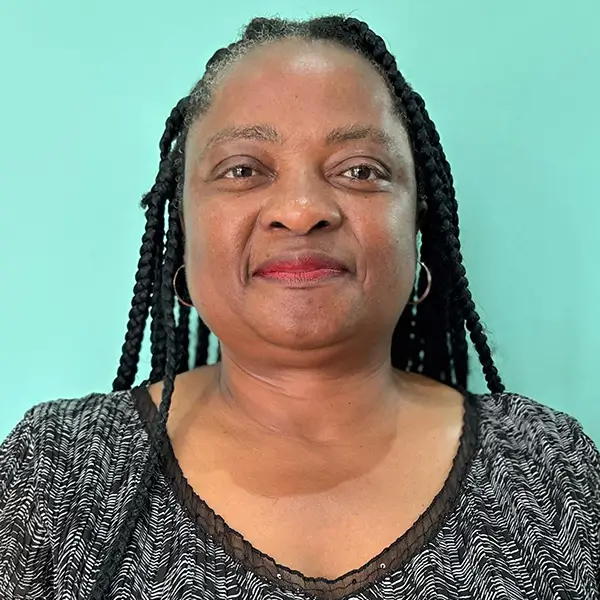
Founding Director: Community Engagement, Entrepreneurship, Inclusive Innovation and Commercialisation, University of Venda
Professor Vhonani Olive Netshandama is the founding Director of Community Engagement, Entrepreneurship, Inclusive Innovation and Commercialisation (CEEIIC) at the University of Venda (UNIVEN), which is a progressive integrated ecosystem space of convergence for the university to disrupt the silos and enhance the third mission and public good. With over two decades of experience in higher education and more than 15 years in senior leadership, she is a leading scholar-practitioner advancing transformative, socially responsive universities, particularly within rural and historically marginalised contexts.
Her work is grounded in participatory action research, decoloniality, and knowledge democracy, emphasising co-learning, co-creation, and equitable partnerships between universities, communities, government, and industry. She has contributed significantly to redefining community engagement as a core academic function, integrating teaching, research, innovation, entrepreneurship, and societal impact. Professor Netshandama’s scholarship has evolved from documenting engagement practices to providing conceptual leadership on societal impact, evaluation, and epistemic justice. She challenges extractive engagement models and advances relational, reflexive, and community-centred approaches, with a strong emphasis on Indigenous Knowledge Systems (IKS) as a foundation for inclusive development and higher education transformation.
Her recent work foregrounds inclusive entrepreneurial and innovation ecosystems as critical pathways for addressing inequality and disrupting extractive development paradigms. She advocates for community-based enterprises, social entrepreneurship, and benefit-sharing models that enable meaningful community participation in knowledge economies. This aligns with national and continental priorities on sustainability, inclusive growth, and transformation. A DST Distinguished Woman Scientist (Social Sciences), Professor Netshandama is also a Certified Entrepreneurial Learning Initiative (ELI) facilitator and an alumnus of the Massachusetts Institute of Technology (MIT) Innovation Leadership Bootcamp. She has led and participated in numerous interdisciplinary collaborations across community engagement, public health, and social innovation.
Professor Netshandama has successfully supervised over 20 doctoral and 30 master’s students, mentoring and coaching hundreds of undergraduate students on critical cross-field competencies, as well as a new generation of scholars in community engagement, entrepreneurship, and inclusive innovation. She has published a number of publications with the team and with mentees.

Acting Director: Economic Development, eThekwini Municipality
Dr Ajiv Maharaj is the Acting Director of Economic Development at eThekwini Municipality. He also serves as Chairperson of Economic Affairs, Trade & Investment at the Durban Chamber of Commerce & Industry, and is an Honorary Research Fellow at UKZN Graduate School of Business & Leadership. He holds a Master’s in Urban Planning and a PhD in Economic Geography,

Strategy Manager: AFRA
Mr Siya Sithole is a passionate community development practitioner. He joined AFRA in 2010 and is the Strategy Manager of the organisation, where he is responsible for aligning AFRA’s programmes and strategic objectives. He leads engagements with government departments, municipalities, courts, beneficiary communities, legal representatives, and AFRA’s team. His approach is grounded in collaboration and accountability, with a strong commitment to advancing social justice, land rights, and community development. He believes: “We can only truly say that we are free once we are all free!”

Chief Executive Officer: Moses Kotane Research Institute
Dr Thandeka Ellenson is an award-winning business leader, researcher, author, and thought leader. She is the recipient of the Standard Bank Public Sector Leader Award, among numerous other professional awards and accolades that recognize her contribution to leadership, innovation, research, and socio-economic development.
She currently serves as the Chief Executive Officer of the Moses Kotane Research Institute (MKRI), a leading research and development agency in KwaZulu-Natal that specializes in action-oriented research, business research, policy analysis, innovation, and capacity development. Under her leadership, the Institute has strengthened its position as a catalyst for evidence-based decision-making, economic development, and knowledge generation.
Academically, Ellenson has made significant contributions in the fields of Artificial Intelligence (AI), innovation, entrepreneurship, leadership, and economic development. She has published scholarly work that explores the role of emerging technologies and innovation in driving organizational performance, economic growth, and societal transformation.
She is also the author of two books, Authentic Leadership Mindset and Money Mindset: Decoding the Myth of Hard Work, which explore leadership excellence, personal growth, financial empowerment, and the mindset shifts required for success in an evolving world.
Ellenson holds a Doctor of Business Administration from Columbia Southern University (USA), an MBA in Finance from Anglia Ruskin University (United Kingdom), and a Bachelor of Commerce Honours degree from the University of KwaZulu-Natal (South Africa).
As a respected speaker and thought leader, Ellenson regularly addresses audiences on digital transformation, artificial intelligence, innovation, entrepreneurship, leadership, governance, economic development, and the future of work. Her insights bridge academic research and practical application, helping organizations and leaders navigate disruption, embrace technological change, and unlock new opportunities in the digital economy.
We invite abstracts in MS Word between 300 and 400 words (in English).
Papers will be sought that examine the transformative role of artificial intelligence, digital technologies, and innovation in shaping research, organisations, industries, and the future of work. Contributions may address AI-enabled research, digital transformation, information systems, business analytics, financial technology (FinTech), automation, digital governance, cybersecurity, ethics, organisational change, and the implications of technological advancement for business and society. The organisers welcome empirical, theoretical, and practice-oriented research that advances responsible innovation, digital inclusion, organisational resilience, and sustainable technological development.
Papers will be sought that examine the role of governance, leadership, and institutions in advancing societal transformation. Contributions may address public administration, institutional effectiveness, public policy, organisational change, anti-corruption, service delivery, adaptive governance, and leadership approaches that strengthen accountability and resilience. The organisers welcome research that contributes to stronger institutions, effective leadership, and sustainable societal progress.
Papers will be sought that examine the role of entrepreneurship, business innovation, and enterprise development in promoting inclusive and sustainable economic growth and socio-economic development. Contributions may address entrepreneurship, social enterprises, informal economies, enterprise development, marketing, consumer behaviour, supply chain and logistics management, operations, technology transfer, business incubation, financing mechanisms, and innovation ecosystems. The organisers welcome scholarship that demonstrates how innovative business practices and entrepreneurial solutions contribute to competitiveness, economic inclusion, resilience, and community development.
Papers will be sought that examine innovative approaches to advancing environmental sustainability and climate resilience through finance, governance, and policy. Contributions may address green finance, climate adaptation and mitigation, ESG reporting and accountability, sustainable investment, the circular economy, disaster risk management, and governance mechanisms that support sustainability transitions. The organisers welcome empirical and conceptual research that promotes environmentally responsible, socially inclusive, and economically sustainable development.
Papers will be sought that examine the role of accounting, finance, financial markets and risk management in promoting economic resilience, organisational performance, sustainable development and sound governance. Contributions may address financial management, corporate and public finance, financial markets, banking, auditing, taxation, financial inclusion, governance, responsible investment, and risk management practices that strengthen institutional resilience and accountability. The organisers welcome scholarship that demonstrates how sound financial systems contribute to transparency, economic stability, sustainable growth and societal transformation.
Papers will be sought that examine collaborative approaches to knowledge creation and societal impact through stakeholder engagement and community partnerships. Contributions may address participatory research, community engagement, co-production of knowledge, knowledge mobilisation, research impact, ethical partnerships, and pathways for translating research into policy and practice. The organisers welcome scholarship that demonstrates how collaborative research can strengthen communities and generate meaningful societal impact.
Papers will be sought that examine how education and skills development can prepare individuals and societies for a rapidly changing world. Contributions may address curriculum innovation, higher education, digital pedagogy, lifelong learning, workforce development, industry-academia partnerships, graduate employability, future skills, and knowledge systems. The organisers welcome research that advances teaching, learning, and skills development in ways that foster innovation, economic resilience, and societal transformation.
Dr Damilola Aboluwodi (AboluwodiD@ukzn.ac.za)
Dr Suhayfa Bhamjee (BhamjeeS@ukzn.ac.za)
Ms Mandhira Bramdeo (bramdeo@ukzn.ac.za)
Dr Nyashadzashe Chiwawa (ChiwawaN@ukzn.ac.za)
Professor Jobo Dubihlela (DubihlelaJ@ukzn.ac.za)
Professor Gavin George (Georgeg@ukzn.ac.za)
Dr Sanele Gumede (Gumedes@ukzn.ac.za)
Dr Janine Hicks (HicksJ@ukzn.ac.za)
Ms Hazel Langa (Langah@ukzn.ac.za)
Professor Isabel Martins (MartinsM@ukzn.ac.za)
Ms Bongiwe Mokoena (Mokoena@ukzn.ac.za)
Dr Lorraine Muguto (MugutoL@ukzn.ac.za)
Dr Admire Mthombeni (MthombeniA@ukzn.ac.za)
Professor Paul Francois Muzindutsi (MuzindutsiP@ukzn.ac.za)
Dr Shushentha Naidoo (NaidooS4@ukzn.ac.za)
Professor Phocenah Nyatanga (Nyatanga@ukzn.ac.za)
Professor Purshottama Sivanarain Reddy (Reddyp1@ukzn.ac.za)
Dr Sheetal Soni (Sonish@ukzn.ac.za)
Professor Mogie Subban (Subbanm@ukzn.ac.za)
Professor Thea van der Westhuizen (Vanderwesthuizent@ukzn.ac.za)
Professor Claire Vermaak (Vermaakc@ukzn.ac.za)
Please direct all queries to Ms Mandhira Bramdeo (bramdeo@ukzn.ac.za)

