

In an era of rapid technological advancements and evolving knowledge landscapes, promoting a culture of continuous learning and research collaboration is paramount for academic institutions.
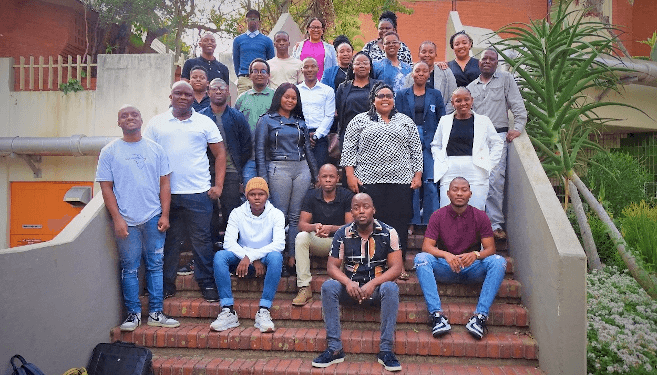
For the School of Management, Information Technology and Governance’s (SMIG) Discipline of Public Governance at UKZN, this commitment was exemplified through the recent hosting of a postgraduate research colloquium.
The event aimed to foster a supportive environment for students, promoting research mentoring, collaboration, and enhancing their presentation skills. In addition to presentations covering a wide range of topics related to Public Administration, the colloquium included discussions on public procurement as well as service delivery and public policy.
The colloquium also encouraged participants to engage in critical thinking and active learning. Students were exposed to various research methodologies, academic writing strategies, and effective communication techniques. This emphasis on promoting a culture of continuous learning equipped students with valuable skills that would benefit their future research endeavours and academic careers.
The postgraduate research colloquium, organised by Dr Elvin Shava and Dr Nduduzo Ndebele from SMIG, received positive feedback from both participants and academics. Students expressed gratitude for the guidance received, collaborative opportunities, and the chance to enhance their presentation skills.
One of the participants remarked, ‘It is an exciting experience presenting in front of my peers and receiving constructive feedback from our mentors,’ while another participant added, ‘I was confused a bit regarding research methods, this colloquium gave me the experience and greater insights I needed.’
National Research Foundation (NRF)/South African Research Chairs Initiative (SARChI) Chair in Sustainable Rural Livelihoods, and Editor of the African Journal of Governance and Development, Professor Betty Mubangizi, was amazed by the quality of the students’ presentations, commending the colloquium for being ‘well-structured’ and ‘critical for fostering a conducive collaboration, networking and intellectual exchange environment.’
Public Governance Academic Leader, Dr Syanda Mthuli, appraised the Honours Colloquium as it enhances student experiences in research and also prepares them for the launching of the new Master of Public Governance (MPG) a full research master’s programme next year.
The colloquium proved to be a valuable avenue for enhancing the students’ research capabilities and fostering a strong research culture within the Institution. As the colloquium becomes a recurring event, its impact is expected to grow, benefiting both individual students and the academic community as a whole.
Words: Sibonginkosi Mabika
Photograph: Supplied