

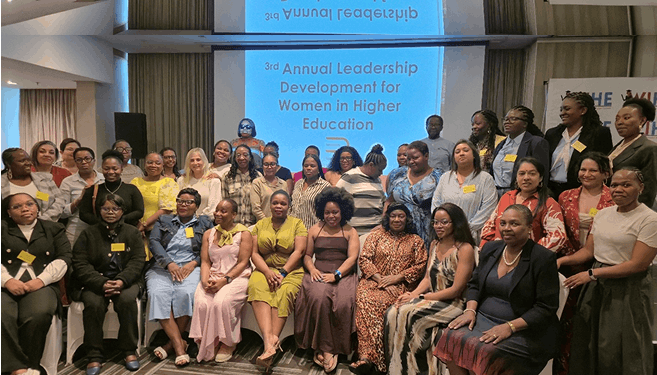
The advancement of women in leadership continues to be an important priority for Higher Education Institutions across Africa.
Against this backdrop, the 3rd Annual Leadership Development for Women in Higher Education Africa Summit provided an important platform for academics and Higher Education professionals to engage in dialogue, share experiences, explore approaches to strengthening women’s leadership in the sector, reflect on the realities facing women academics and leaders while highlighting the importance of creating institutional environments in which women can develop their leadership capabilities, contribute meaningfully to institutional transformation and take on greater leadership responsibilities.
Representing the University of KwaZulu-Natal (UKZN), Dr Andrisha Beharry-Ramraj, a senior lecturer in Management in the School of Commerce, emphasised that participating in such platforms extends beyond individual career advancement; it is about building networks, fostering collaboration, sharing knowledge, and empowering the next generation of women leaders in Higher Education.
A key takeaway from the summit was the imperative to view women’s leadership as a collective institutional responsibility. Cultivating female leaders extends beyond encouraging individuals to pursue executive roles; it demands structured mentorship, supportive organisational cultures, robust professional development, and dedicated platforms for knowledge sharing.
For African universities, this conversation is particularly relevant as institutions continue to navigate changing social, economic and educational environments. The Summit therefore provided a space for reflection, knowledge sharing, and relationship building, while reinforcing the importance of continued investment in women’s leadership within the Higher Education sector.
Participation in national, continental and international academic platforms contributes to UKZN’s broader objectives of academic excellence, collaboration, internationalisation and the development of its academic community.
Engagement at events such as the Women in Higher Education Africa Summit also creates opportunities for academics to bring new perspectives and knowledge back into their institutions and to develop networks that can contribute to future research, collaboration and professional initiatives.
The development of women leaders in Higher Education is ultimately about creating a stronger and more inclusive academic future. As universities across Africa continue to transform, the experiences, knowledge, and leadership of women academics will remain critical to shaping institutions that are innovative, resilient, inclusive and responsive to society.
Beharry-Ramraj stated that the 3rd Annual Leadership Development for Women in Higher Education Africa Summit provided a valuable reminder that when women are supported to lead, they do not lead alone; they create pathways for others to rise with them.
Words: NdabaOnline
Photograph: Supplied